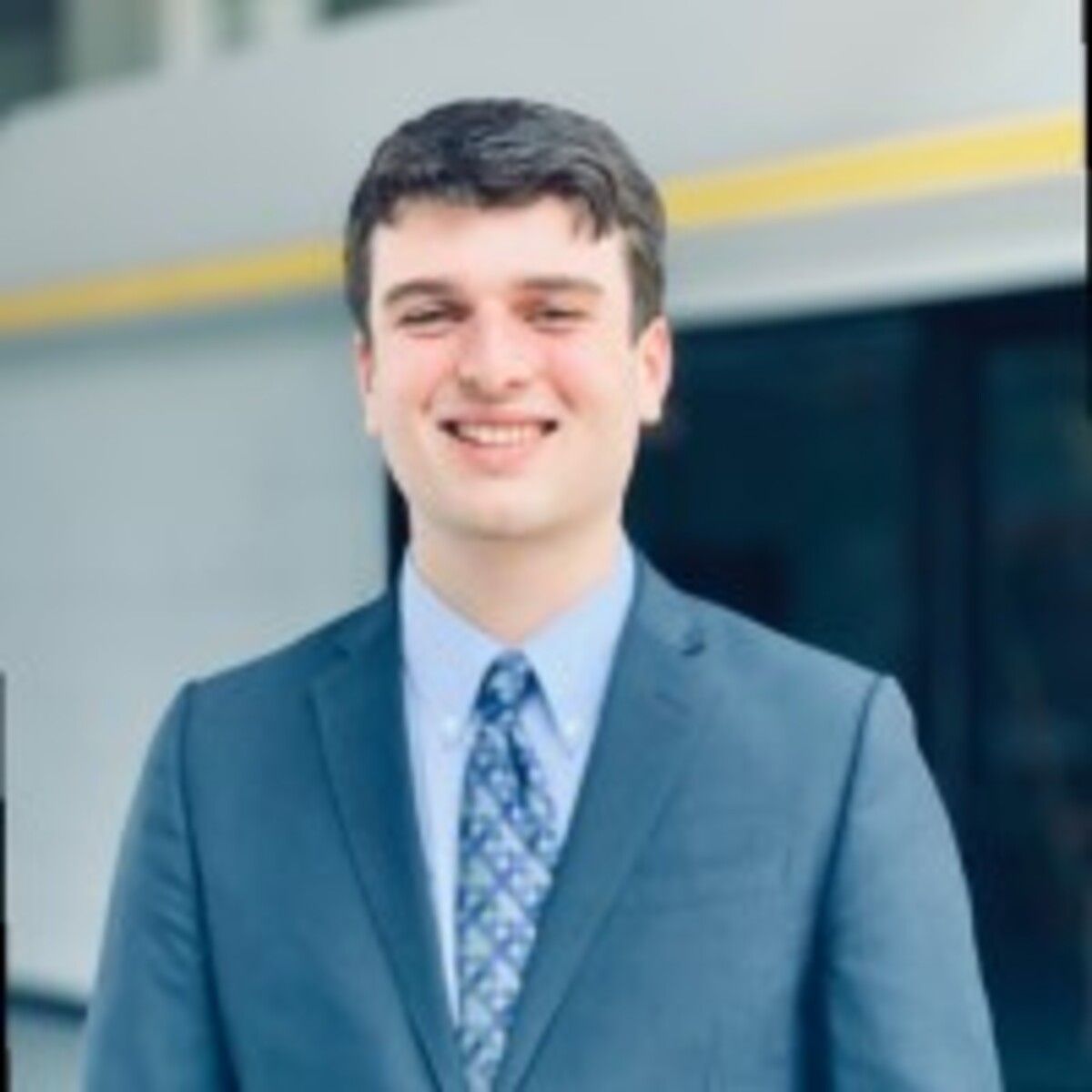

Interview #1: Carlos Ventura
One of my goals this year was to share more content directly from some of the coolest people and companies in retail via long-form, written interviews.
I am so excited to share this conversation with Carlos Ventura, the CEO of Feast & Fettle, a service that delivers meals straight to your home. I have had the pleasure of getting to know Carlos over the years, and I am super excited to share his story and thoughts on the retail space.
Keep an eye out in your inbox for sporadic mid-week issues when chatting with some awesome people in and around the retail ecosystem. Have anyone you want to hear from? Please be sure to drop their names 👇
The following conversation has been lightly edited for context and clarity.
Noah Sobel-Pressman: Carlos, I really appreciate you making the time. For those who aren't aware, could you please tell them more about Feast & Fettle?
Carlos Ventura: Feast & Fettle is a fully vertically integrated hospitality business. We are in the business of meal delivery. We handle everything from prep to cook to deliver. We've taken a different approach than most have in terms of capital raising and expansion. We're very, very rooted in this lens of hospitality and being the best in the space. For us, and for this industry, we feel that requires owning the entire experience from sourcing ingredients to making that final drop at a customer's door.
NSP: Could you share more about your retail strategy and how it's evolved over the years, from doing your own retail stores, to being in other retailers, and focusing on the delivery part, like how all that came together?
CV: I think it's important to note that we started as a private chef and a nanny business. Irrespective of the distribution channel, we need to make sure that we can provide the same level of quality and service that we were able to provide at that small scale as we scale from 15 customers to 15,000 customers. When we think about distribution channels, and as we've explored them over time, we've always ensured that, if we can't do that [quality], then that channel doesn't work for us, at least. That could be trying something out at a smaller scale, and then years down the line, trying it on a larger scale, and having a different outcome. Our bread and butter, since we started, has been home delivery, and I think that going back to my earlier point on being a hospitality business, being able to differentiate yourself in the home delivery space, whether that's making the deliveries in really gorgeous Mercedes Sprinters and having a driver that remembers your dog's name. Those little accents go a very long way.
About two years ago, we decided to try retail. We only try things if it really comes from our customers. At the time, our customers were saying, “I wish I could order on a shorter delivery window.” People were looking for a way to access the product in a way that they could not. When we think about retail and combining it with hospitality, we're like, let's do this. Let's go 110%.
It's very hard to pilot retail because you can pilot a location, and that location can go well, but physical retail, is location-by-location specific. We knew we needed three locations in three different types of areas to see if this was something we wanted to pursue long-term. For example, in one of our original towns that we started the business in, we did extraordinarily well,however, our second one, which was in a more urban market, didn't do as well. We started to see the differences in performance between the locations. Ultimately, we probably could have figured it out [and made retail stores work]. The issue Feast & Fettle had was a capital allocation issue, and an executive team focus issue. I started to realize that most of my management team, 80% of their time, was dedicated to retail, and retail was less than 5% of our total sales.
If you're looking at retail, physical retail versus home delivery, we had a lot of ways to expand geographically [for the home delivery market]. We're very good at launching new markets, and so two years ago, we made a very quick decision [to shut down the physical stores]. It was a quick pilot. It was an expensive pilot, but we learned a lot. It was a focused decision to make sure that we were putting the capital in the right place for the business at that point in time. [However,] we found that where those retail locations were situated, the surrounding one and a half mile radius around those specific locations saw a massive uptick in the membership to the core [delivery] business. That's always stuck in our mind as there's something [about] being in the physical world that adds this other element of trust. Folks would just see the Feast & Fettle retail store and be like, oh, like, they're real. Then they would sign up for the core delivery service. Surprisingly, I think there are a lot more people than [not] that are like that.
NSP: To take a step back, even with AI being such a big topic point in the world, retail is definitely getting a lot of buzz recently. In your mind, how would you define retail, and do you consider Feast & Fettle a retailer?
CV: I've seen it in a traditional sense, we're not a retailer [since] we aren't in a physical retail location. But, in terms of branding, service, technology, and everything besides the distribution, we are very much a retailer. We just happen to do distribution and most of our communication online. [Regarding whether Feast & Fettle is a retailer] I think it depends on who you ask. But, we compete with retailers, so why not?
NSP: With growing a brand, one of the big topics that comes up, whether you're a retailer or a CPG brand or something else, is do I focus on national growth versus regional growth? Could you share more about your thoughts on the smarter growth strategy today, whether that's in retail or not? A national launch or something that's more regionally focused?
CV: I don't necessarily think there's a right or wrong way. I think you have to pick what makes the most sense for your business, and for us, I think food, and fresh food, and dinner time is pretty sacred, and the degree to which we want to provide a service and develop a brand requires a lot of attention to detail.
A lot of commitment to the community. Everybody says that. Everyone from Uber to DoorDash will say they are committed to the communities that they operate in. But, I don't mean it like that. I mean, like, for real. [For example,] one of the food banks in one of our service areas ran out of food, and we just topped up that food bank. That's the normal course of business at Feast & Fettle. We are eyes on the ground, we know the folks on the ground, and we establish what we represent as a brand. To me, that involves understanding the physical world and the local community you operate in because we are a physical, capital-intensive, human-intensive business.
Now, if you're talking about scaling protein bars across the United States, they don't need to do that. They probably have a much different growth strategy. If you get locked up in a Whole Foods distribution agreement, you're gonna try to get into as many Whole Foods as possible, and it's a different strategy. But for us being more in the upper end of the market, more on the premium side, I don't really know too many premium brands that blitz scale. It was just a decision early on that we made and a strategy that's worked out specifically in the space that we operated.
NSP: One of the things you mentioned in terms of retail is you're very actively competing with retailers for consumers' wallets, in particular, grocery stores. Grocery has been such a hot topic recently. In terms of the grocery model, traditionally, do you think it's structurally broken, or do you think it's something that just needs more reinvention?
CV: I don't think it is structurally broken. I'm gonna pick on Whole Foods because everybody remembers what Whole Foods used to be, and what it is becoming. There are pros and cons to both. Old Whole Foods had more local products and was relatively more community-driven. It felt like you belonged. I remember going to the one they put up in Gowanus in Brooklyn, and everything felt so localized and thoughtful. Post acquisition of Amazon, Amazon isn't optimizing for that. Amazon is optimizing for convenience, speed, and probably ultimately price. It's just evolved into something that has a different strategy. And so I don't think it's broken. I just think that consumers want different things. Even if I go to Trader Joe's, it is more like an exploration experience. Whole Foods is “how can I get in and out as fast as possible?”
That's why I think you see specific niches doing pretty well, like an Erewhon, which is on one end of the spectrum. It is just a very high-quality product, or [at least] perceived values are extraordinarily high. Prices are very high, but they're talking to a very specific customer. I think we're headed to a place where we're not just gonna have these blanket, massive stores that just serve 95% of people. I think what you're starting to see is a segmentation based on use case. I forgot what the stat was exactly, but people go to the grocery store an average of almost 3 times a week. There will be winners, there will be losers, but I don't think we're just gonna go into a place where everything doesn't merge to the average. That would suck.
NSP: You touched on it a little bit, but would love to double click into the future of retail and, whether it's AI or not, how you're thinking about the next 3 to 5 years in the broader retail space as you're looking at your competitors who are more like traditional retailers and what's going to happen.
CV: For us, it's always been about, how can I save my customers more time, and position it in a way that [they think about], what are you gonna do alternatively with that time? When I think about AI, I try to think about what can't I do [with Feast & Fettle] right now that AI enables? AI enables a very personalized, customized, assistant-driven approach to selecting your meals every week. It feels more like a personal chef interaction than me going on a website and clicking pictures of images of food and adding it to my cart. So, the experience can be much more personalized, it can actually be more on brand, more contextual, and easier and faster all at the same time.
When I think about AI in the context of Feast & Fettle, I think about AI augmentation, not AI, takeover. Especially anything for the customer. One of the things that we're known for is customer service. Like, best in the business. And if we just said we're gonna save X dollars and flip this over to AI agents, I just think there is a line you need to draw, particularly with hospitality and AI, and we need to find that right balance. That balance will obviously shift over time, but we can't just be like we're gonna save X dollars per head, because now everything's done with AI. Even if it does it perfectly, you lose the soul of the interaction. And when it comes to food and when it comes to retail, I think it's exacerbated. I think retail specifically is gonna get more interesting over time, because if it is purely transactional, I don't need to have a physical retail interaction, meaning I feel that's where Whole Foods is going [to be more transactional].
I'm gonna step out of food for a second, but [think about] Aesop. If you go into an Aesop, which is just hand soap and lotion, when you're in there, the people working there are storytelling, and the design of the location is gorgeous. It's thoughtful. Everything is very thoughtful, and when you go in, you end up spending five times the amount you wanted to, but that's the point. Because you feel they put forth the effort to care, and you can feel that. You are now willing to open your wallet a little bit more. When I think about retail, you need to pick your path. Are you gonna try to compete with Amazon, Whole Foods, Walmart, or do you want to have an experience that people will remember and talk about? No one's gonna talk to you about their last Whole Foods visit. I think they used to, 10, 15 years ago, but, things have shifted.
NSP: One thing that's been a theme about what you've been sharing with Feast & Fettle is capital efficiency and getting as much ROI for your investment as possible. When you're talking to emerging brands, what's your advice on the best way to maintain that capital efficiency?
CV: I think today it's more important than ever, because the days of a VC backing a retail type of business is just not gonna happen. We kind of all knew while it was happening, that it wasn't a great idea, and then we found out why it wasn't a great idea. I think there's certain types of businesses that require certain types of capital and certain expected outcomes from investors. [For instance,] if I'm starting an AI business, I can raise a $10 million at $100 million valuation, but I better be growing 300x. There are all these expectations with investors. I think when you think about the type of capital you bring into your business, make sure that the investor appetite and risk profile are aligned with what you want for the business and what the business needs.
I'll use myself as an example. I came from a world where we were raising hundreds of millions of dollars round after round after round, and really basically blitzscaling and trying to take [over] the market. I knew if we were going to do anything more vertically integrated, higher touch, and more thoughtful, I couldn't just raise venture for that. It just didn't make sense, and we ended up with an investor that is a family office that's an evergreen fund. And that aligned with what I wanted at the time, but also what the business needed. It was the best of both worlds
I hate how we glamorize fundraising rounds, because we see 100 announcements on LinkedIn every day, but you don't see the 99 announcements of all the businesses that failed. I'm not saying that you shouldn't take a shot. I'm just saying, we need to be more realistic as to what game we're playing. In CPG and food, you have to prove out your unit economics and your profitability at a small scale before you throw money on it.
NSP: The last question I have for you, keeping with the theme of the newsletter, is retail dead or alive? Why?
CV: Retail's always gonna be alive. People want new, exciting, fun experiences, and if you're willing to give that to them, they'll pay for it. It's basic. Is it evolving? Of course. But, what isn't? What's not evolving? So I don't think retail is dead, and I don't think we're close. If anything, with AI, it might see an acceleration of more of the in-person retail experiences, as people get sick and tired of being on the internet and getting overwhelmed with AI 24-7. You're probably get a lot more, a lot more desire for retail interactions.
Thank you again to Carlos for chatting. Be sure to check him out on Linkedin and on Feast & Fettle’s website.
Hiring in 8 countries shouldn't require 8 different processes

This guide from Deel breaks down how to build one global hiring system. You’ll learn about assessment frameworks that scale, how to do headcount planning across regions, and even intake processes that work everywhere. As HR pros know, hiring in one country is hard enough. So let this free global hiring guide give you the tools you need to avoid global hiring headaches.
Was this forwarded to you? Sign up here.
Have an idea or want to chat? Respond to this email.
Is the email not reaching your inbox? Try this trick.
